
A busy restaurant cannot afford a refrigeration failure during service. A hotel laundry cannot afford a washer stopping when linen demand peaks. For businesses across Saudi Arabia, equipment downtime can interrupt operations, increase repair costs and affect customer satisfaction.
That is why preventive maintenance for commercial kitchen and laundry equipment should be part of every facility’s operating plan—not something considered only after a breakdown
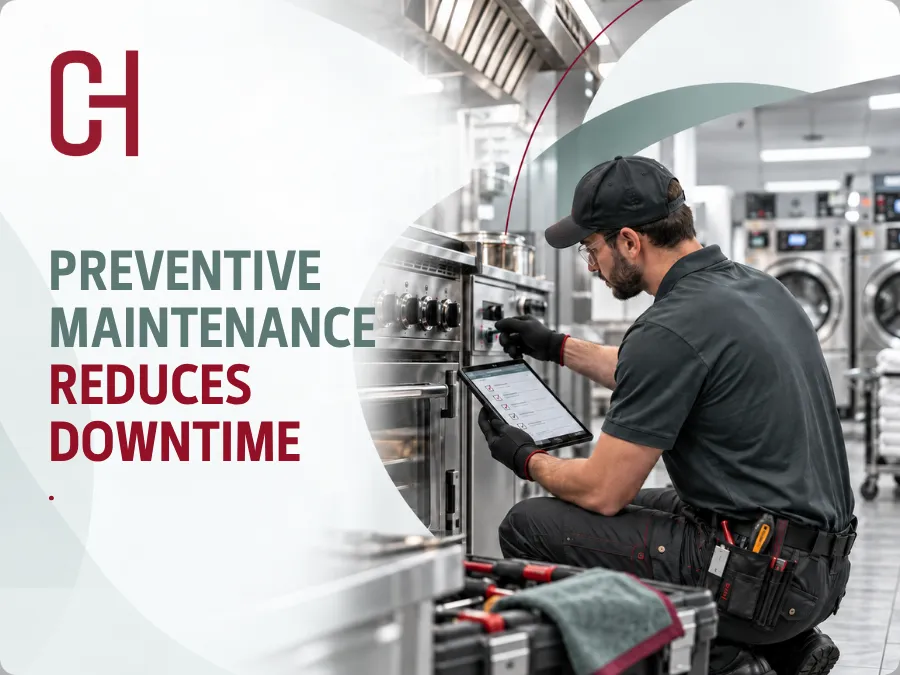
1. Reduce Unplanned Downtime
Routine inspections can uncover worn door seals, unusual vibrations, loose connections and changing operating temperatures before minor issues become major faults.
Scheduling servicing outside peak hours helps restaurants, hotels, hospitals and industrial laundries maintain dependable operations.
Looking for the best commercial kitchen & laundry maintenance ?
2. Protect Efficiency and Equipment Life
Blocked ventilation, scale buildup and worn components can make equipment work harder than necessary.
Regular cleaning, calibration and professional servicing help commercial ovens, refrigeration systems, dishwashers, washers and dryers operate as intended.
Effective maintenance may also reduce avoidable energy and water consumption while protecting the long-term value of your investment.
3. Support Hygiene and Operational Safety
In commercial kitchens, equipment maintenance supports food safety and hygiene. Faulty refrigeration, damaged seals and poorly maintained dishwashers can affect temperature control and cleaning performance.
In commercial laundries, inspecting filters, drainage systems and temperature settings supports consistent washing results.
All maintenance should follow manufacturer instructions and appropriate safety procedures.
4. Plan Spare Parts Before They Become Urgent
Preventive maintenance also means identifying components most likely to wear out.
Having compatible commercial kitchen spare parts and industrial laundry replacement parts available can reduce repair delays.
Always confirm the equipment model, component specifications and availability before ordering. A reliable spare-parts partner is especially valuable when equipment operates daily.
5. Establish a Practical Maintenance Schedule
Begin with an equipment register and manufacturer-recommended service intervals.
Assign simple daily checks to trained operators and schedule qualified technicians for periodic inspections and repairs.
Record service dates, recurring faults and replaced parts. For busy facilities, an annual maintenance contract can make planned servicing easier to manage.

With over 40 years of industry experience, CHBIB has its own maintenance department, supported by trained technical professionals and an extensive inventory of spare parts for commercial kitchen and laundry equipment.
From preventive maintenance and troubleshooting to repairs and spare-parts support, CHBIB helps businesses in Riyadh, Jeddah and across Saudi Arabia.
Explore CHBIB’s spare parts and maintenance services or contact our team to discuss your facility’s needs.